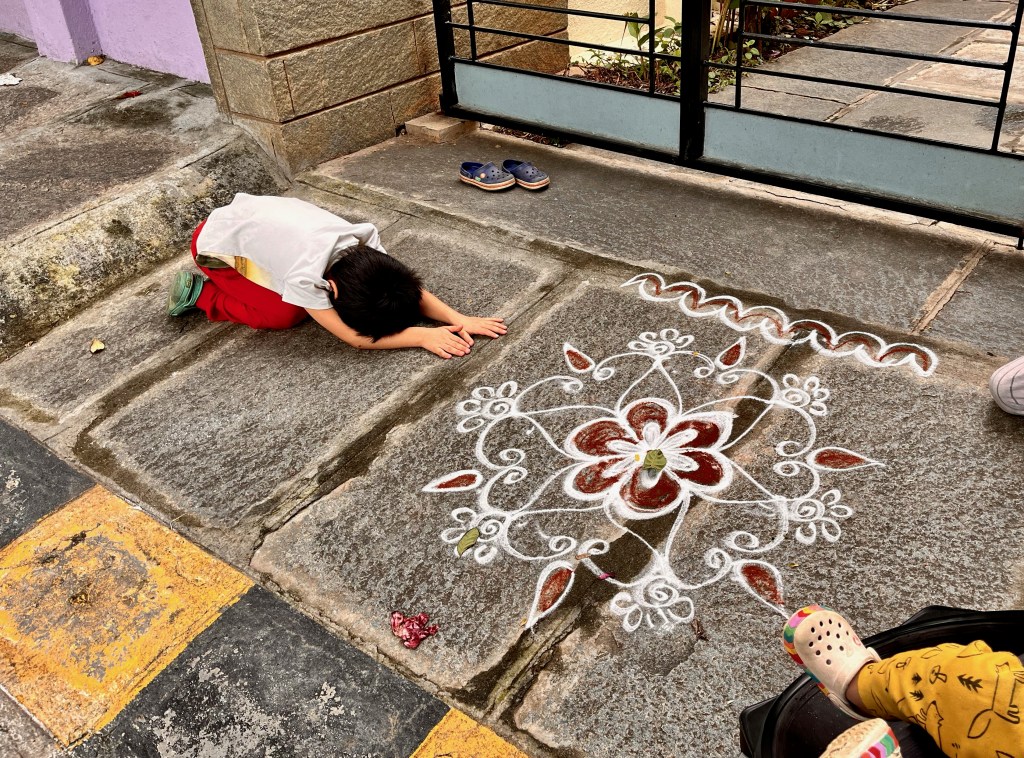
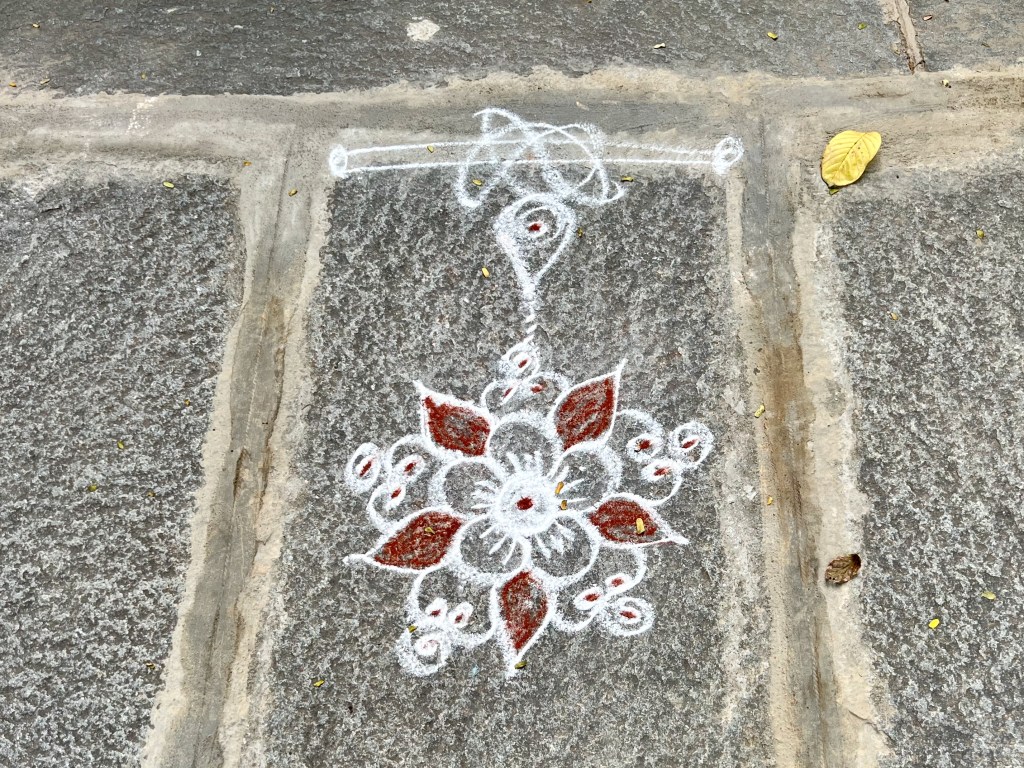
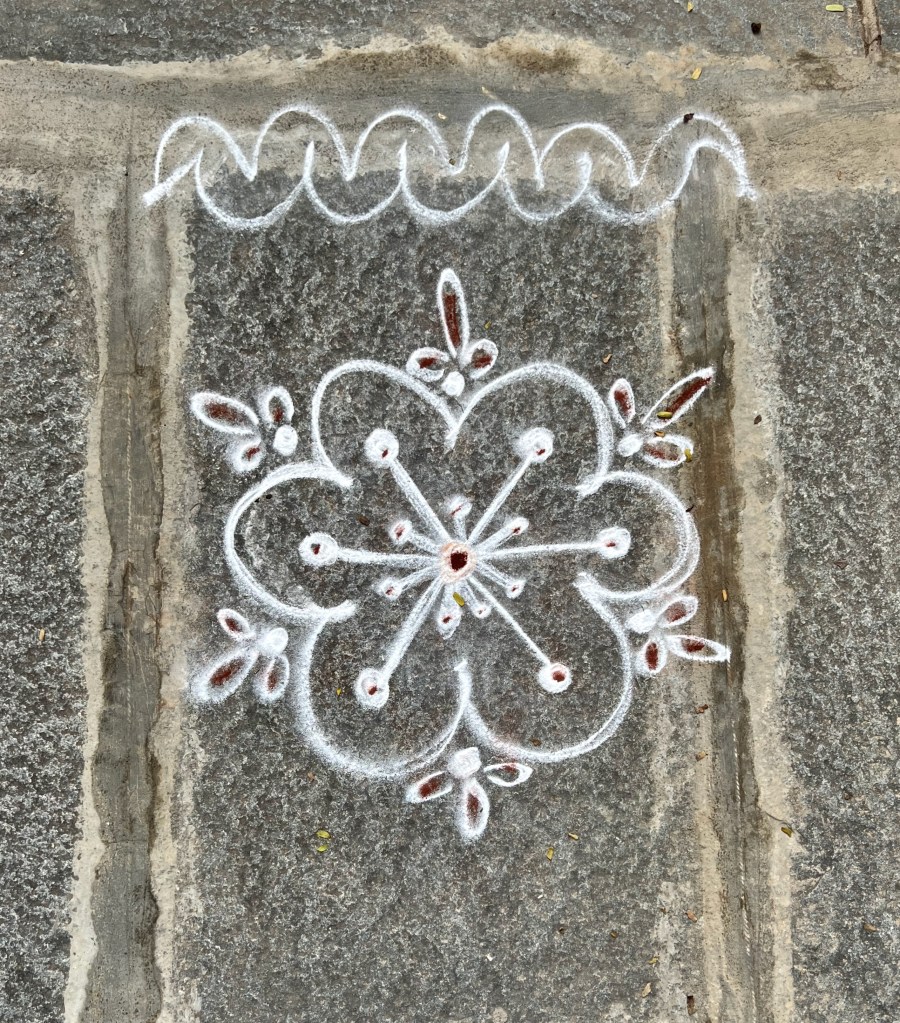
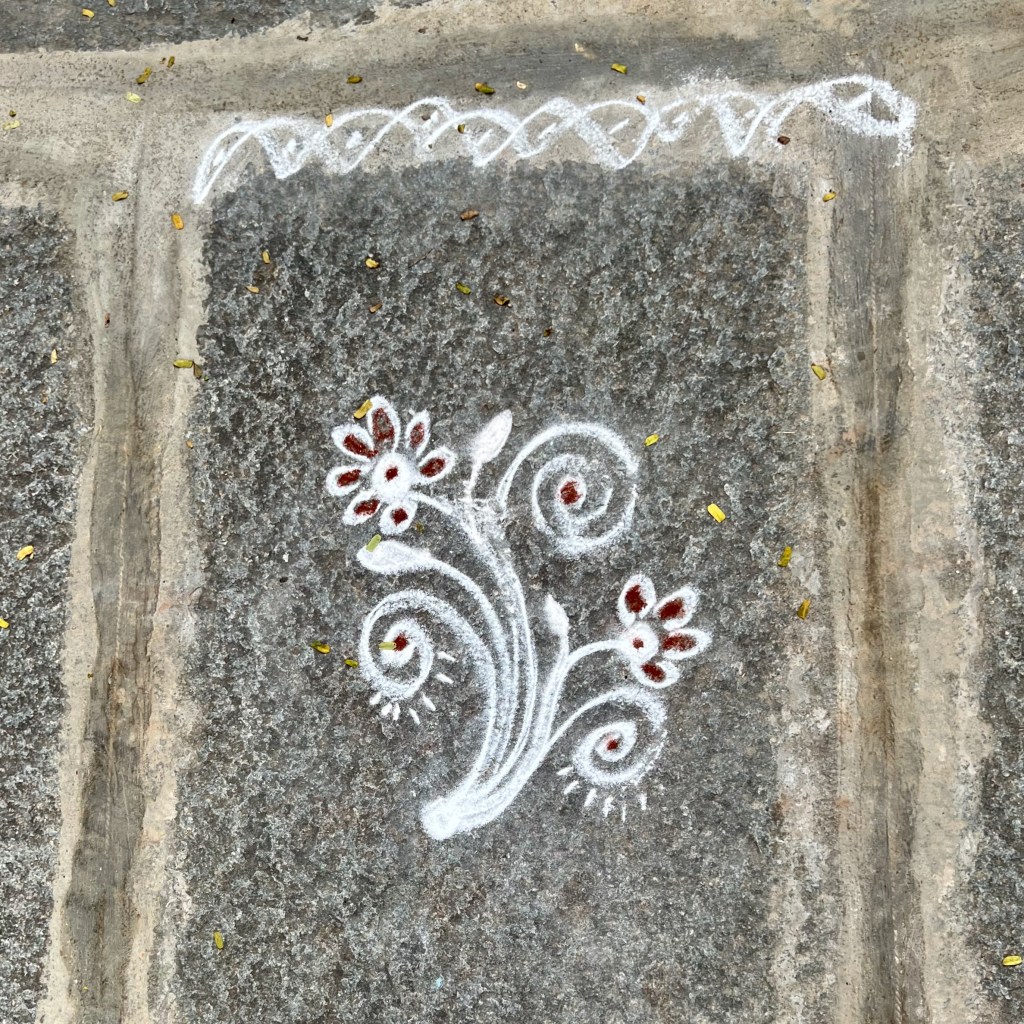
There are many things I’ve grown to appreciate in Bangalore since we’ve shifted here and rangoli – Indian folk art hand drawn on the floor or the entrances of homes – is one of them. The move here has been very hard and there are still so many things I struggle with but the sight of a beautifully yet simply drawn rangoli brings me so much joy and sense of calm. I can feel my heart rate slowing down and a smile develop on my face as I walk past a nice rangoli. It’s really just the simple things in life that make a difference and seeing beautiful rangoli and imagining the hands that drew them reminds me of this everyday.
And how lucky I am that every morning I get to enjoy our own rangoli right at our front gate! Before we moved here, my father-in-law made a deal with a lady – a lady who’s in charge of sweeping and keeping our street clean – to clean and sweep our driveway and draw rangoli outside our front gate every morning. Honestly, I didn’t think much of it when I was first told about this deal but the daily sweeping is a life saver because of how dirty and dusty it gets here. I also had no idea that rangoli would end up meaning so much to me and how I process my emotions during this big life transition. Every morning, the boys and I look forward to seeing the rangoli on our way out of the house and it’s important to have something to look forward to in your daily life. Even the simple rangoli are so attractive and appealing to the eye. I’m reminded every day of how fortunate I am to get to return to a home with a clean entrance adorned with beautiful art. All for such a small price.
Here’s a little about rangoli:
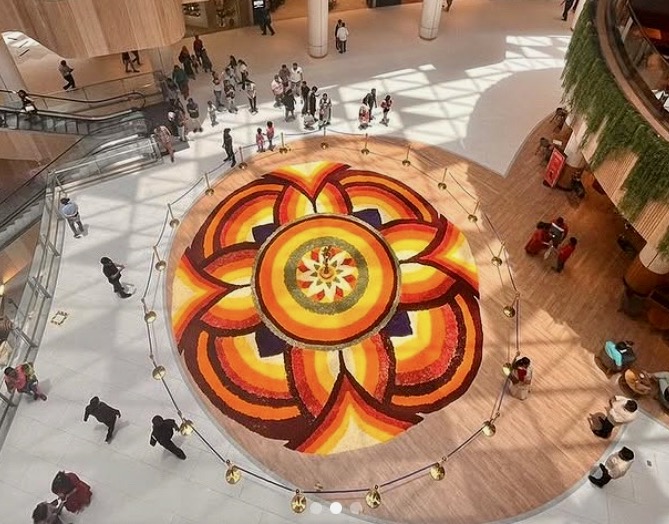
Rangoli is drawn by hand and is made using sand, flower petals, rice flour, lentils and beans and it is a symbol of hospitality to welcome guests and invite positive energy into the home. It is also thought to bring good luck and ward off evil spirits. During festivals or special occasions, rangoli become larger, more colorful, and more intricate. The intricate ones are also so wonderful!
Traditionally in South India (where Bangalore is located), rangoli was predominantly a women’s practice. In Bangalore, as part of their morning rituals, women would create rangoli designs early in the morning right outside the front door or entrance of their homes. Nowadays, as I’ve learned from our driver (who has won a rangoli competition), men are also beginning to contribute to these ritualistic practices. Rangoli is also drawn inside the home for puja (worship) spaces, thresholds of temples, businesses, and other places that are considered sacred or auspicious. In our home (we’re living in the house my husband grew up in), we have a dedicated puja room that was built in when it was constructed about 40 years ago.
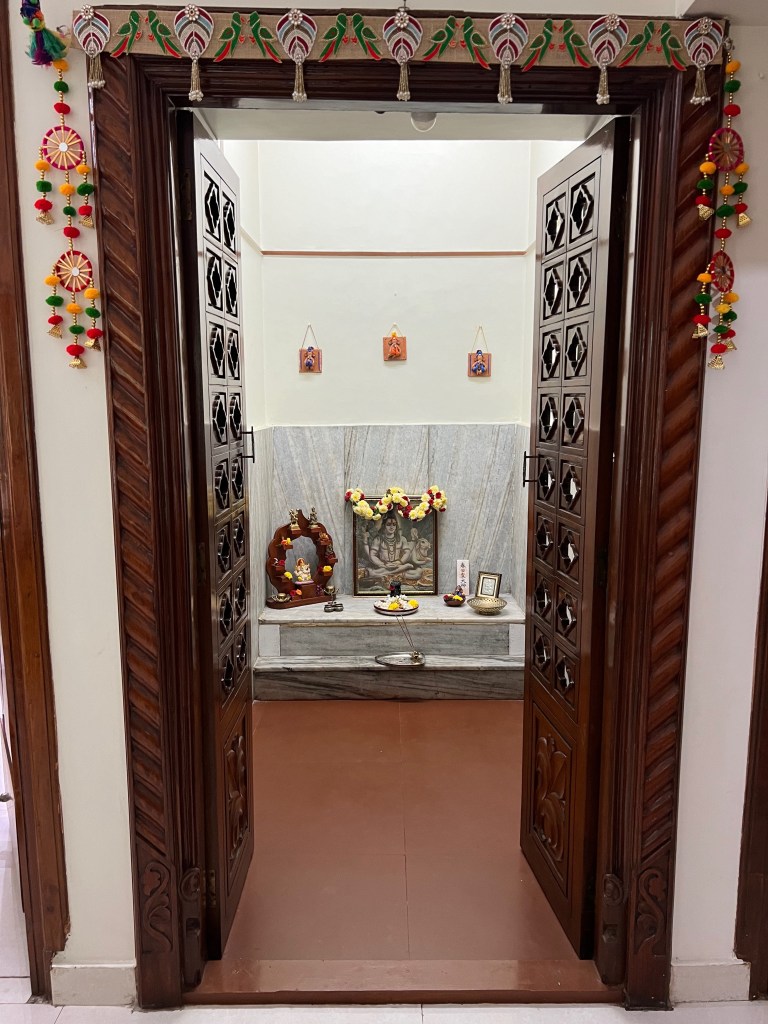
I plan on practicing rangoli and hope to eventually feel confident enough to start drawing them at the entrances of our terrace and puja room so stay tuned for updates on that!
If you are interested in learning more about rangoli and its history, Indian Floor Art: The Origins of the Rangoli is a great resource.
Also, check out this video of the making of a beautiful rangoli.
 A Hybrid Life
Leave a comment